

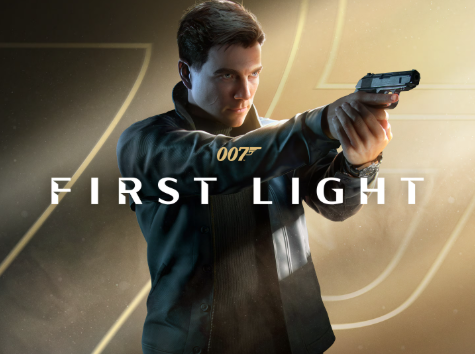
Guide & Tips · Action · 2026
007 First Light: the definitive guide to beating every mission
Everything you need to get through 007 First Light without a hitch: solutions to the trickiest puzzles, stealth and combat tricks, strategies against the final bosses, a complete gadget guide, and mechanical tips for every mission in the campaign.
Fact Sheet
| Developer and publisher | IO Interactive (self-published) |
| Engine | Glacier Engine (proprietary engine) |
| Release date | May 27, 2026 (PC, PS5, Xbox Series X|S) |
| Platforms | PC (Steam), PlayStation 5, Xbox Series X|S, Nintendo Switch 2 (Q3 2026) |
| Genre | Cinematic third-person action and stealth |
| Average length | Around 20 hours to complete the campaign |
| Protagonist | James Bond, played by Patrick Gibson |
007 First Light is the first foray into the James Bond universe by IO Interactive, the Danish studio behind the modern Hitman trilogy. Rather than adapting a film or repeating the formula of the already-established agent, the studio chose to tell an origin story: a twenty-six-year-old Bond, still without a license to kill, who has to earn 00 status through merit, mistakes, and decisions that will mark him forever. The result is a third-person action and stealth game with an unusually careful script for the genre, a highly cinematic staging, and a mission system that rewards both the patience of the silent infiltrator and the forcefulness of the field agent.
This guide is designed to answer specific questions while you play: what code to enter into a particular safe, how to defeat a boss that seems impossible on the first attempt, which gadget is best suited for each type of mission, and which mechanical tricks make the difference between burning through all your ammo in two shots or getting through an entire firefight with the starting pistol. We also cover, without padding or detours, the game’s development, its voice cast, its critical reception, its technical requirements, and its various editions.
Throughout the text you’ll find dedicated boxes with key facts, practical tips, common mistakes worth avoiding, and spoiler warnings ahead of any block covering major plot twists, so you can jump straight to what you need without having to read the whole guide start to finish. If you’re only looking for the solution to a specific puzzle or the strategy against a particular boss, each section’s headings are designed to allow that kind of quick, targeted reading.
From Hitman to Bond: the real story behind the project
IO Interactive announced it was working on an original James Bond game in November 2020, but large-scale production didn’t seriously get underway until the studio wrapped the Hitman 3 cycle in 2021. For several years the project developed almost in silence, with occasional and very measured appearances, until it was fully revealed in June 2025 with a trailer showing a young, inexperienced, and visibly human Bond. The project’s budget, not counting the subsequent marketing campaign, exceeded 100 million dollars, a figure that places 007 First Light among the most ambitious productions ever signed off by a mid-sized European studio.
Development was split across the five studios IO Interactive maintains in Copenhagen, Malmö, Istanbul, Barcelona, and Brighton, a far from trivial logistical feat for a game with so many distinct locations and a real cast of actors captured through motion capture and facial performance. The release date was delayed: originally set for March 27, 2026, it was pushed to May 27 of that same year following an announcement made in December 2025, while the Nintendo Switch 2 version was pushed back to the third quarter of 2026.
Key fact
The studio has publicly insisted that no generative artificial intelligence was used at any point during development, neither for dialogue nor for art. Particular care was also taken with linguistic register: after the first demo tests, the team swapped American expressions like «parking lot» for the British equivalent «car park» to reinforce the authenticity of the Bond universe.
One of the details most talked about by the specialized press is that this is the first playable Bond since 2001’s Agent Under Fire whose physical appearance isn’t drawn from any film actor. IO Interactive built a visual identity of its own for the character, played by Irish actor Patrick Gibson, precisely to avoid any direct comparison with the film saga and to be able to tell an origin story with total narrative freedom.
On the technical side, the studio developed a proprietary volumetric smoke system that, according to its own engineers, «had never been done in any other game,» combined with ray tracing and fully dynamic global illumination running on its Glacier engine, the same one that has underpinned the entire modern Hitman trilogy. The soundtrack was handled by the band The Flight, while the main theme, titled «First Light,» was performed by Lana Del Rey and co-written and produced by David Arnold, a longtime composer for several Bond film scores; the theme was released on April 16, 2026, weeks ahead of the game’s launch.
Story, setting, and cast
007 First Light tells the origin story of James Bond as an MI6 recruit, a twenty-six-year-old who has not yet reached 00 status and must prove his worth across a handful of missions that start out as recruitment tests and end up uncovering a far larger conspiracy. The plot weaves together rogue agents, corrupt officials, and a military artificial intelligence system known as THEIA, whose control becomes the true prize of the story. The journey takes the player through very different settings: Iceland, Slovakia, Mauritania, Vietnam, and Antarctica, each with its own visual identity and its own type of mission.
The voice cast combines recognizable actors with performers who specialize in video games. Besides Patrick Gibson as Bond, the cast includes Priyanga Burford as M, Alastair Mackenzie as Q, Kiera Lester as Miss Moneypenny, Lennie James as John Greenway, Bond’s mentor at MI6, Noémie Nakai as Isola Vale, a thief who becomes an ally and possible love interest, Gemma Chan as Selina Tan, an expert in game theory and artificial intelligence, Lenny Kravitz as arms dealer Bawma, and Anthony Howell and Bart Edwards as Sir Nicholas Webb and his son Damien Webb, the story’s main antagonists.
One of the aspects most praised by critics has been precisely the writing: the secondary dialogue, the banter between Bond and his fellow recruits, and the development of the supporting cast make the story work even in its quieter stretches, something uncommon in an action game centered on set-pieces. The character design also deliberately avoids some of the most criticized tropes of the classic Bond saga, particularly in the portrayal of female characters, who here have their own motivations and narrative arcs independent of the protagonist.
Each of the five main locations functions almost like a tonally distinct chapter within the same story. Iceland opens the game with a raw, survival-driven tone, with barely any resources; Slovakia, centered on the Grand Carpathian Hotel, leans into drawing-room intrigue and unhurried investigation; Mauritania, in the pirate city of Aleph, introduces a more adventurous tone, almost a frontier western, with illegal auctions and warring factions; Vietnam recaptures the classic glamour of the Bond saga with a luxury resort as its cover; and Antarctica closes out the campaign with frozen military facilities that return the game to the survival tension of its opening hours, closing the narrative circle opened by the Iceland mission.
Stealth, combat, and driving: how the game works under the hood
007 First Light is played in third person and lets the player decide, mission by mission and sometimes room by room, whether to move forward unseen or solve problems with fists and bullets. Hitman’s influence is evident in the stealth design: eavesdropping on conversations, using environmental distractions, disguising yourself with stolen uniforms, and lying directly to guards are all tools as valid as knocking someone out from behind. The influence of series like Uncharted, meanwhile, shows through in the more spectacular action stretches, with set-pieces that combine firefights, chases, and the occasional quick-time-event sequence.
A central mechanic of the game is what’s called the license to kill: Bond only resorts to lethal force once the game itself confirms the enemy has lethal intent, which translates into an on-screen prompt reading «License to kill» framed in red. Firing before that prompt appears, or against targets who haven’t triggered it, has narrative and scoring consequences, so it’s worth paying attention in the early hours, when it isn’t yet clear when the game allows you to go for the kill and when it prefers a non-lethal resolution.
Melee combat draws directly from the fluid combat system of the Batman Arkham series: chaining strikes, stunning enemies with grabs, and throwing environmental objects are all part of a single flow of animations that rewards rhythm over button-mashing. Ranged combat, by contrast, is deliberately more resource-scarce: ammunition is limited on purpose, which forces frequent weapon swaps and makes you use every bullet rather than hoarding it. Driving, meanwhile, is a complete novelty for IO Interactive: this is the studio’s first game with drivable vehicles, the standout being a customized Aston Martin Valhalla that appears in several missions with dynamic chase sequences.
Gadgets: Q’s arsenal, explained
The kit Q provides before each mission is, in practice, just as important as the weapon arsenal itself. Bond can carry three active devices at a time: the Q-Watch, which is always equipped, plus two other gadgets chosen depending on the mission.
- Q-Watch: a modified Omega Seamaster Diver 300M used to hack electronic devices, terminals, cameras, and, in a few specific missions, more complex mechanical systems like an aircraft’s controls.
- Q-Lens: a vision mode that highlights keys, access cards, cash, and points of interest on non-playable characters; it’s worth activating constantly when entering a new area, since it also flags nearby collectibles with a bookmark-shaped tag.
- Dart Phone: fires a tranquilizer dart disguised as a phone call; its effect lasts longer than similar gadgets, which makes it the best option for stealing items from a stunned enemy without them waking up mid-maneuver.
- Laser Strap / Laser Strip: a device that blinds, disarms, or disables electronic equipment at range; especially useful against enemies who already have their firearms drawn.
- Flash Mine: a distraction mine that can also be triggered manually as a trap, ideal for cutting off a group of guards mid-chase.
- Q-Tracks: tracking devices placed on a target to monitor their position for the rest of the mission, usually planted covertly inside an everyday object.
- Q-Glasses and Smoke Device: the former are used to record and analyze information without raising suspicion; the latter generates an instant smoke screen that lets you break several enemies’ line of sight at once and reposition safely.
Pro tip
Always pair an «energy» type gadget (Laser Strap, Shockwave Camera) with a «chemical» or physical one (Dart Phone, Flash Mine, Smoke Device). Carrying two gadgets of the same type leaves you without an answer when the environment calls for the other kind of solution, which happens often in missions with more environmental puzzles.
Driving: how to master the Aston Martin Valhalla
As IO Interactive’s first game with fully drivable vehicles, driving has its own set of rules worth learning before the campaign’s first serious chase shows up. Bond’s Aston Martin Valhalla is no ordinary car: it comes with reinforced armor, a front-mounted machine gun, a short-range missile launcher, and a single-use-per-mission ejector seat, all of them activated from the same quick menu used to switch gadgets in on-foot sections.
- The handbrake is the most reliable tool for taking tight corners at high speed; letting off the gas entirely before a curve usually costs more time than braking in a controlled way while keeping some of your speed.
- The front machine gun overheats with sustained use: fire it in short bursts against vehicles approaching from ahead instead of holding the trigger down, or you’ll be left without that defense right when you need it most.
- The short-range missiles have very limited ammo and are meant for armored vehicles or reinforcement trucks, never for regular cars that go down with two or three machine-gun hits.
- The Q-Lens also works behind the wheel and highlights enemy vehicles’ weak points in a different color — usually the engine or the rear wheels — letting you immobilize them with far fewer shots than aiming at the bodywork in general.
- The ejector seat can only be used once per driving sequence and is usually reserved by the script for a specific escape moment; trying to trigger it early, during chases where the game doesn’t account for it yet, simply has no effect.
Progression and skill tree
As Bond completes missions and side objectives he earns skill points that go into three independent branches: combat, stealth, and utility. None of the three is mandatory to finish the campaign, but spending points wisely makes a noticeable difference in the tougher stretches of the second half of the game.
- Combat branch: improves the duration of perfect-parry windows, adds new grab combos, and unlocks the ability to finish off two stunned enemies at once with a single context animation.
- Stealth branch: reduces footstep noise while crouch-running, widens the guard detection radius that can be viewed with the Q-Lens, and speeds up Instinct recharge after each silent takedown.
- Utility branch: increases reserve ammo capacity for gadgets like the Flash Mine or Smoke Device and reduces the Q-Watch’s hacking time on cameras and terminals.
For those prioritizing a fully stealthy playthrough, it’s worth investing early points in the stealth branch before combat: it drastically cuts down the number of unplanned encounters and, by extension, the need to spend ammo or healing items. Those who prefer a more direct style will feel the impact of the combat branch much sooner, particularly the upgrade that lets you counter two attackers at once, very useful in the two-on-one fights that show up in several missions during the second half of the campaign.
Essential combat, stealth, and exploration tricks
Before getting into the mission-by-mission detail, it’s worth internalizing a handful of mechanics that make the difference between a rough time throughout and feeling like a capable agent from the very first hours.
Melee and ranged combat
- Don’t mash buttons at random: alternate direct strikes, grabs, and thrown objects in rotation. The combat system rewards reading your opponent, not the speed of your button presses.
- The perfect parry triggers when the enemy’s yellow flash reaches its maximum brightness, right before impact; blocking it opens a long window for a counterattack.
- Always prioritize headshots: a single hit takes down an unarmored enemy, while body shots are rarely efficient against protected targets.
- Against heavily armored enemies, shoot the legs to incapacitate them without wasting extra ammo finishing them off elsewhere.
- In fights against multiple opponents, focus all your damage on a single enemy until they’re down before moving to the next; spreading damage across all of them needlessly drags out every fight and multiplies the risk.
Stealth and infiltration
- Only draw your weapon once the red-framed «License to kill» text appears on screen; using it too early carries a narrative penalty.
- Interrupt guards’ radio calls by hitting the yellow antenna icon that appears over their head; if they complete the call, the whole area goes on alert.
- The Bluff ability lets you lie to regular guards to avoid suspicion, but it doesn’t work against Watchers, an enemy type specialized in spotting infiltrators.
- Instinct, the meter that powers special abilities, recharges by listening in on conversations and performing silent takedowns, not just by moving through the level.
- Avoid unnecessary fights whenever you can: ammunition is deliberately scarce, so every firefight you skip is ammo you’ll have available for the next boss or ambush.
Disguises and distractions
Unlike the modern Hitman trilogy, in 007 First Light disguises aren’t the backbone of level design but a situational tool that appears at very specific moments in each mission. Even so, understanding them well saves you from wasting whole minutes wandering around wondering why a guard is still suspicious.
- Each disguise has a specific exclusion zone: usually the very group of characters the stolen garment originally belonged to (for example, the rest of the waiters in «A Night Out»). Outside that zone the disguise is completely reliable; inside it, any character from that same group can recognize Bond if he gets too close.
- Environmental distractions — radios, hoses, vacuum cleaners, drink trays — don’t just pull a guard away from their post: they also open a brief window to complete a hacking or theft action without anyone noticing, so it’s best to trigger them right before attempting the main action, not after.
- The suspicion indicator, shown as a small icon above a non-playable character’s head, goes through three stages before triggering the alarm: it’s worth breaking line of sight as soon as the first stage is detected, since letting it reach the final stage triggers combat or a chase directly.
- Specific «bluff» items — an invitation, a press pass, a fake ID — temporarily substitute for a full disguise in certain specific conversations, and are usually the fastest way to complete an infiltration objective without having to knock anyone out.
Exploration and resources
- Turn on Q-Lens almost permanently when entering a new room: it reveals keys, cards, cash, and collectibles without having to search every piece of furniture by hand.
- Use Focus Mode during firefights to chain precise shots or even intercept grenades thrown your way before they go off.
- You can hack live grenades with the Q-Watch to neutralize them from a distance; doing so also unlocks a specific achievement or trophy.
- In the more open areas, resources like ammo or medkits regenerate over time if you revisit them later, so there’s no need to drain every supply on the first pass.
Common mistake
Hoarding ammo «just in case» is counterproductive: the game is calibrated for you to spend it with judgment, not to stockpile it. If you reach a final boss with your ammo untouched but without having trained your melee combos, you’ll have a much harder time than someone who’s been spending resources intelligently throughout the campaign.
Mission-by-mission guide: puzzles, objectives, and key moments
Spoiler warning
From here on we detail objectives, codes, and plot twists for all twelve missions in the campaign. If you’d rather discover them on your own, skip straight to the Bosses and special enemies section and only use this guide when you get stuck on a specific point.
The game autosaves at the start of each mission and also at several intermediate checkpoints that usually line up with the end of each block of objectives described below; there’s no free manual save at any point. This means that if a particular code or combination is giving you trouble, you can almost always reload the last checkpoint instead of replaying the entire mission from the start, which is especially useful in multi-step puzzle stretches like «All The Time In The World» or «Knightfall.»
1. Against The Odds
The opening mission puts Bond in as an air crew member who survives a missile attack and is stranded in hostile territory, in the middle of an undercover operation in Iceland, while receiving instructions from an MI6 liaison. It’s a tutorial disguised as a set-piece: use these first few minutes to get familiar with cover, the aiming system, and the first hints about the license-to-kill mechanic, since the game still walks you through when to shoot and when not to at this stage.
While descending the snowy slope it’s worth taking your time at each cover section before advancing to the next: the game deliberately places more enemies here than it first appears, and rushing usually means running out of ammo before reaching the extraction point. It’s also worth examining the wreckage of the downed plane right after landing: it contains the first pair of collectibles in the game, a set of crew dog tags that won’t show up again if you move on without picking them up. As with any introductory mission, the game is generous about forgiving aiming mistakes, so it’s a good moment to experiment with throwing hand grenades and get a feel for the trajectory arc before ammunition really starts running low in later missions.
2. The Needle’s Eye
A month after the events in Iceland, MI6 officially recruits Bond after being impressed by his performance. This mission functions as a formal entrance test and introduces basic training mechanics: structured melee combat, first notions of stealth, and an introduction to the fellow recruits who’ll reappear throughout the campaign. There are no complex puzzles, but it’s worth paying attention to the parry and dodge tutorials, since they’re assumed to be learned from here on.
The MI6 training ground includes an optional shooting range that many players skip in their rush to advance the plot, but it’s worth completing: the time spent there calibrates your aim sensitivity before the first field missions ramp up enemy difficulty. It’s also the campaign’s last chance to listen, without any time pressure, to the fellow recruits’ full conversations, since several of their jokes and comments function as small clues about the personalities of characters who’ll reappear much later, including some of the instructors themselves. If you’re after the achievement or trophy for completing training without failing a single exercise, take it slow: the game doesn’t penalize the time spent on this particular mission.
3. A Night Out
Bond and his fellow recruits get, in the middle of a night off at a club, an improvised field exam: identify a leak in the Ministry of Trade through a target named Joshua Pike.
- Find the contact in red: approach the woman in the red dress at the bar, then talk to the man in the red shirt, who gives out the real assignment.
- Locate the package: go to the restroom and open the third stall to retrieve a tablet with the mission details.
- Investigate Joshua Pike: defeat the jealous boyfriend who shows up in the restroom to get the tip that Pike is upstairs, in an area only accessible with an invitation.
- Head to the upper floor: go to the back of the stage and bluff the security guard by posing as a lighting technician; then climb and make your way across the platforms to the balcony.
- Hack Pike: use the Q-Lens to spot him, get close, and hack his phone while keeping your distance; when he moves to an exclusive booth, grab a drinks tray to pose as a waiter and complete the hack without raising suspicion.
- Neutralize Pike: take him to the restroom on that same floor and sabotage the door handle to lock him inside.
- Confront the contact: find the woman in the black dress behind the coat check and choose the right dialogue options to convince her to call her handler.
- Extraction: defeat the jealous boyfriend and his friends again before reaching the meeting point with your team.
4. All The Time In The World
Bond acts as chauffeur for two colleagues during a world chess championship held at the Grand Carpathian Hotel. After spotting suspicious behavior from a bellhop, he decides to investigate on his own and ends up uncovering a plot involving a pair of mysterious assassin twins.
- Investigation at the hotel: climb in through a ledge after distracting a guard with the Dart Phone; get the staff key by distracting a waiter, and use a vacuum cleaner as a distraction to get past a guarded hallway.
- Laundry code: access the manager’s office with the staff key and find the code 1805 among the papers on the desk.
- Optional safe: under that same desk is a safe with the code 1952, deduced by examining the wine display in the room.
- Follow the blond man: make your way through the laundry area (by sneaking, fighting, or in disguise), return to the hotel by climbing a pipe, and follow the suspect to Room 206 using the cleaning lady’s card to enter Room 205 first and jump between balconies.
- Secret passage puzzle: find a torn page showing a chimera (lion, goat, and snake) and interact with the fireplace lock, selecting the three animals in that same order to reveal the entrance to the wine cellar.
- Fights against the twins: the first confrontation in the cellar is resolved with standard parries and counters; the second, against the twin brother, is a two-on-one fight where it’s best to move laterally to avoid getting caught between both of them.
- Defuse the bomb: select the battery first, then cut either of the two remaining wires; the order between those last two doesn’t matter.
- Final chase: after a car chase, cross the runway while taking out enemies and using explosive barrels, board the plane via the cargo ramp, hack the flight controls with the Q-Watch to generate turbulence, and force the hostile crew member to bail out with a parachute so you can land safely.
5. The Past Never Dies
Bond follows the trail of rogue agent 009 to the pirate city of Aleph, in Mauritania, thanks to a Q-Watch previously planted on his plane. It’s the longest and most varied mission of the first half of the game.
- Prep: in Q’s lab you’ll receive two new gadgets, the Laser Strap and the Flash Mine; for this particular mission it’s recommended to pair them with the Dart Phone and your service pistol.
- Raise the $100,000 needed for the auction, through three independent routes you can combine:
- Operation Scorpius: listen in on guards talking about a weapons exchange, infiltrate the control room to grab a burner phone, retrieve some antiques from Container 76, and wait for the buyer to show up to close the deal for $52,000.
- The fighting pit: defeat Omar to earn Yasin’s respect, win three consecutive rounds of melee combat, and pocket $60,000.
- The jewel game: use the Q-Lens to identify the real jewel among the fakes (the game is rigged if you don’t) and sell it at the pawn shop for $30,000.
- The auction: present your invitation and payment, open the bidding with cash, watch the rivals’ offers, and hack the lie detector to eliminate the third bidder; the final round is won by choosing, in the dialogue option, to «improvise» with three decades of MI6 intelligence instead of offering more money.
- Crime scene: examine 009’s body and the investigation board in his cabin until you find a photograph with the note «Remember This» referring to «Operation Spyglass»; flip the photo over to reveal a hidden symbol and use the spyglass to identify the ship carrying that same emblem.
- Traps aboard 009’s ship: make your way across ledges and platforms, disarming several trap devices; use the activated taps to reveal the pattern of the laser wires and time your movements to get through the moving barriers in the later sections.
- Confrontation with Bawma: caught over a crocodile pit, neither negotiating nor offering money works; instead, swing to wake up Greenway, who mentions «Harmony,» Bawma’s lost sister, which finally convinces the trafficker to free them.
6. Beyond The Grave
After 009’s death, Bond searches an abandoned wreck for the clues the agent left behind before dying. The mission combines underwater and surface exploration with a systematic search for documents and personal effects scattered through the wreckage; it’s worth keeping the Q-Lens on constantly once inside the ship’s hull, since much of the relevant evidence is camouflaged among the wreckage and doesn’t stand out at a glance.
The route is split into three air pockets separated by stretches that require holding your breath, so it’s worth planning the route before diving in: Bond’s oxygen bar is generous but not infinite, and running out of air halfway through a narrow stretch forces you to repeat the whole section from the last safe point. Among 009’s personal effects is a journal partially destroyed by water whose readable pages, if you collect them all, unlock an additional dialogue fragment in the next conversation with Q about the fallen agent’s past. In the wreck’s engine room, there’s also a sealed toolbox that can only be opened with the Q-Watch after identifying, via the Q-Lens, the serial number stamped on the main engine; inside is one of the most sought-after weapon collectibles in the campaign, a deactivated prop pistol used at the very auction event from the previous mission.
7. Uninvited
The case is officially closed once evidence is found, but the briefcase holding it is destroyed before it can be analyzed. Bond, at his safe house, is ambushed, reopening the whole investigation.
- Ambush at home: defeat the two intruders in the apartment and dodge a sniper by moving from cover to cover until you reach a crane control cabin; blind the sniper with the lights and swing the crane toward their position to neutralize them.
- Chasing the killer: the attacker turns out to be one of the blond twins (Murto); track his phone signal via triangulation to the Museum of Arts and Works, where the target ditches the phone in a restroom.
- Accessing the security room: listen in on the guards to learn they’re short-staffed, distract the café waiters with a radio and the Dart Phone or Laser Strap to get to a tablet, retrieve the access credentials, and, when talking to the guard, say the name «Harry Sykes» to be let through without issue.
- CCTV room: defeat the guards with the card you obtained, and inside you’ll find the computer password written on the bottom of a mug: «Password12.» Moneypenny will then locate Murto in the basement archive.
- Final escape: after being drugged and captured along with Isola, Bond has to hack Damien Webb’s phone while managing his own resistance by choosing the dialogue order «Provoke → Provoke → Hold on → Provoke»; then make your way through the museum galleries and an ambush at the loading dock before fleeing in a delivery truck.
8. Knightfall
Assassins attack Bond and his team on their own turf, pushing the leading pair to infiltrate Webb Industries to gather evidence about THEIA, the compromised intelligence system that gives much of the plot its name.
- Initial access: get an access card in a restroom (the stall marked «out of order») and a lab uniform from a locker, whose key is in a nearby waste unit.
- The safe code is 1493, deduced by examining four objects in Webb’s office: the framed diploma reading «top of his class» equals 1; the painting titled «Basilisk, version no. 4» equals 4; the video game labeled «Hyperion 9» equals 9; and the model marked «Site 3» equals 3. That order — diploma, painting, video game, model — gives the full combination.
- Making your way through the building: combine air ducts, cleaning robots that open automatic doors, exterior balcony ledges, and laser strips you’ll need to dodge or disable to move between floors.
- Safe documents: inside you’ll find the «Basilisk» command code and the credentials needed to force the servers manually later on.
- Confrontation with Sir Nicholas: the suggested dialogue responses are «Because I could,» «THEIA is broken,» and «A terrible burden»; none of them substantially changes the outcome of the scene, so pick whichever best fits your read on the character.
- Final escape: you have 90 seconds to reach a control room while avoiding enemies and jump onto a helicopter before the platform you’re on finishes descending.
9. Time To Die
M orders Bond to carry out an unauthorized black op to gather physical evidence against Sir Nicholas, infiltrating an exclusive Vietnamese resort under the false identity of a millionaire playboy named St. John Smythe.
- Recommended kit: Q hands out Q-Glasses, Q-Tracks devices, a silenced pistol, the Laser Strip, and the Dart Phone; it’s worth carrying the Dart Phone and some distraction gadget as the backbone of your infiltration.
- Plant Q-Tracks on three targets:
- Ellis White, at the ocean-view bar: get the invitation by distracting two women with a hose, access the storeroom by distracting the bartender with the Dart Phone, retrieve the minibar keys by triggering another hose to distract the staff, and serve Ellis a Tequila Slammer with the Q-Track hidden inside.
- Theresa Lorca, at the serenity space: gather information on the tranquility platform, hack the entrance radio to clear the guest area, and plant the Q-Track during the conversation.
- Roman Hernandez, at Villa Hung: get a yoga mat from the storeroom (incapacitate the guard to steal his key), disguise yourself as a yoga instructor, and hand over the device without raising suspicion.
- Crisis phase: respond to Lorca’s emergency alert as she goes freediving unsupervised, and get ready for the evening party by learning to tie a bow tie with Q’s help.
- Assault on Villa Emperador: push forward mixing stealth and combat until you reach the rooftop, where Damien is holding Lorca and White. Rescue Ellis by heading down to the cellar, kicking down the door, and quickly taking out his two guards; rescue Theresa by following the markers to the bar area and using a zip line to reach the building where Murto is holding her.
- Boss: Murto. A melee fight centered on parries, grabs, and counters; a well-placed kick knocks him through the flames to complete the first phase of the encounter.
- Boss: Damien Webb (first encounter). In the first phase, throw rocks to stun him and hit him repeatedly while he’s stunned; in the second phase, use the environment’s lights to blind him and finish him off using the metal pipes as an improvised weapon.
- Final quarry sequence: with limited kit, direct Greenway to destroy obstacles, operate a construction vehicle to help him, and chase down Damien; when the moment comes to distract him verbally, the most effective line is «MI6 knows everything. This is your father’s doing. Don’t do this.»
Pro tip
«Time To Die» packs two boss fights back to back in a short span (Murto and the first fight against Damien Webb), so it’s worth arriving at Villa Emperador with full health and, if possible, a spare medkit you haven’t burned through in the earlier firefights. Needlessly draining your resources during the assault on the villa is the most common reason this mission becomes an uphill battle on the higher difficulty settings.
10. Wave Of The Future
Bond chases down Sir Nicholas alongside his ally Isola to stop MI6 from granting him diplomatic immunity before they can present conclusive evidence. It’s a mission built around chases and dialogue choices with narrative consequences rather than complex environmental puzzles: prioritize staying in cover during firefights and rely on Isola to flank larger groups of enemies, since at this point in the campaign she acts as an active combat companion.
This mission’s driving stretch is the most demanding in the entire campaign: Bond has to tail Sir Nicholas’s vehicle down a busy highway while Isola fires from the passenger seat, so it’s worth saving the Valhalla’s turbo for the straight stretches and braking earlier than seems necessary on the coast’s tight curves. Isola automatically tags hostile vehicles that join the chase, and shooting them in the engine — highlighted in the Q-Lens with an icon different from the rest of the bodywork — immobilizes them in two or three hits, much faster than trying to blow the tires out. Dialogue choices with Isola during the calmer stretches between firefights don’t change the mission’s immediate outcome, but they do shape nuances of her attitude toward Bond in the campaign’s final stretch, so anyone hoping for a closer relationship between the two characters should consistently pick the responses that offer to share information rather than withhold it.
11. For England
Isola tries to betray Bond right as someone else storms the MI6 facility and frees all the prisoners, including both of them. It’s the campaign’s final stretch and packs in a good share of the game’s most demanding fights.
- Escape the holding block: move forward with limited kit, prioritizing stealth or taking down guards one at a time to grab their weapons.
- Reach the red phone: take down the guard on the left, climb a ladder, and turn a valve to release cover smoke; from the security room, contact M.
- Locate Moneypenny: cross the Operations area while dodging or eliminating enemies; when a platform explodes, shoot a red pipe to take out a protected sniper, and make your way through the ducts to Q’s Lab and the THEIA facility.
- Reach THEIA: clear three guards at the elevator entrance; inside, Damien, wearing full armor, stabs Moneypenny and makes off with THEIA’s core. Q then hands over a special Q-Watch before Bond sets off in pursuit.
- Find the Valhalla’s keys: access the changing area from the left side of Q’s Lab; open the locker panel and search the coat furthest to the right.
- Lift the lockdown: activate the lab’s central computer while fending off incoming enemies; a nearby laser turret can help you clear the room faster.
- Clear the area: use the Valhalla’s machine gun and missiles against the surrounding enemies; when Damien traps you, trigger the ejector seat to escape.
- Flooded tunnels: follow Damien through the flooded passages to the final showdown.
- Final boss: Damien Webb. Shoot the explosive barrels or pipes when Damien gets near them, repeating the maneuver three times; avoid his laser attack by taking cover; sync two sentry turrets with your weapon before firing on him; the fight closes with a final melee clash that drags both of them into the water, at which point Isola steps in to save Bond.
12. Final Mission
With the charges against Bond dropped, M confirms that the official case is closed, though two central questions remain open: Isola’s true loyalty and the final whereabouts of THEIA’s core. Completing the campaign lets the player self-designate as «007» in the game’s menus, a symbolic gesture that closes out the character’s arc from recruit to full-fledged agent.
Bosses and special enemies: how to beat them without the frustration
007 First Light saves its toughest fights for a handful of recurring enemies who appear across several missions with increasingly elaborate attack patterns. This section brings together, in one place, the strategies that work against each of them.
Murto, the assassin twin
Murto shows up at several points in the campaign, and each encounter calls for a different approach; repeating the same tactic twice in a row won’t work.
- In his first major confrontation, inside the museum, you can drop a chandelier on him if he stands right underneath it, perform a silent takedown from behind if you manage to get around him unseen, or hack nearby construction lights to blind him with a flash. Each of these three methods only works once per encounter.
- At the Vietnamese resort, the fight is more direct and comes down to constant parries, grabs, and counterattacks; finding the moment to shove him into a nearby burning area speeds the fight up considerably.
Damien Webb, the recurring antagonist
Damien is by far the enemy with the most distinct phases in the whole game, and he shows up with increasingly advanced protective gear as the plot progresses.
- First fight (Vietnam): phase one, stun him with thrown rocks and hit him while he’s stunned; phase two, blind him with the environment’s lights and finish him off with metal pipes as a melee weapon.
- Final fight («For England» mission): shoot the explosive barrels or pipes when he gets near them, repeating the process three times in total; take cover from his laser attack instead of trying to dodge it out in the open; sync two sentry turrets with your own weapon before opening fire on him to maximize damage in the closing stretch of the fight.
Pro tip
Against Watchers, the enemy type that can spot a bluff, never try to lie: they’ll call you out on the spot and put the whole area on alert. Against them, the only reliable approach is pure stealth or a silent takedown before they confirm your identity.
Collectibles and side content: what’s worth chasing down
007 First Light isn’t a game designed for extreme completionism in the open-world sense, but each of its twelve missions hides a handful of optional items and challenges that reward careful exploration without ever bogging down the main campaign’s pace.
Character files
Scattered across the different locations are folders and files with extra information about secondary characters, MI6 agents, and members of the rival organization. Collecting them doesn’t change the plot’s outcome, but it unlocks extra lines of dialogue in the casual conversations between missions, especially with Q and Moneypenny, and rounds out the backstory of characters who only appear tangentially in the main campaign. The Q-Lens highlights them with a folder-shaped icon as soon as you enter the room where they’re hidden, so there’s no need to memorize specific locations: just activate it upon reaching each new area.
Outfits and weapon skins
Beyond the outfits earned through pre-order or a premium edition purchase, the campaign hides several alternate outfits unlocked by completing very specific side objectives: clearing a mission without triggering a single alarm, beating a boss using melee combat only, or getting through an entire level without firing a single shot from a firearm. None of these outfits change Bond’s stats; they’re purely cosmetic, but several players use them as a way of setting their own replayability goals once they’ve finished the main story for the first time.
Optional per-mission challenges
Each mission includes between three and five optional challenges visible from the pause menu, ranging from pure stealth objectives («complete the mission without being detected») to more eccentric challenges tied to using a specific gadget or finding a hard-to-spot alternate route. Completing them isn’t required to progress the story, but they serve as an indirect replayability guide: if on your first playthrough you went for direct combat in «A Night Out,» for example, that mission’s challenges tend to push you toward attempting the same sequence the fully stealthy way next time.
Key fact
No collectible or optional challenge is ever permanently missable if you finish the campaign without picking everything up: the mission select screen lets you replay any level separately once the story is finished, keeping the gadget loadout unlocked up to that point, which makes cleaning up collectibles a perfectly manageable task after the credits roll.
Tips for Hitman veterans: what changes and what stays the same
Much of the audience coming to 007 First Light arrives straight from the modern Hitman trilogy, and it’s natural to apply reflexes learned there that work differently here, or don’t exist at all. This section rounds up the most useful mindset adjustments for that transition.
- Forget the constant level restart. In Hitman, blowing a plan usually means restarting the entire mission and trying another route from scratch. Here, levels are much more linear and the game is built for improvising on the fly after a slip-up, not for restarting in search of the perfect run.
- Combat is no longer the last resort. In the Hitman trilogy, going into open combat is almost always synonymous with failure. In 007 First Light, the melee combat system is designed to be a viable and even enjoyable option, not a penalty; don’t hesitate to use it when stealth gets too complicated.
- There’s no «Agent 47 instinct» for tagging targets through walls. The Q-Lens serves a similar function, but it’s more limited in range and doesn’t recharge as freely; it’s best used room by room, not left on indiscriminately.
- Disguises aren’t universal. As covered in the tricks section, each disguise has a specific exclusion zone; don’t expect to be able to walk an entire level in a single disguise the way you can in many Hitman levels.
- Limited ammo changes the risk calculus. In Hitman, ammo is rarely a real problem. Here, wasting it on irrelevant enemies can leave you without resources for a final boss, so it’s worth applying the «only shoot when you truly need to» rule described in the essential tricks section.
007 First Light versus other spy and stealth games
To better place the game within IO Interactive’s catalog and the action-stealth genre in general, this table compares its main traits with those of the modern Hitman trilogy, the studio’s own most direct reference point.
| Aspect | Hitman (modern trilogy) | 007 First Light |
|---|---|---|
| Structure | Replayable sandbox levels | Linear campaign with exploration stretches |
| Narrative | Secondary, sandbox-oriented | Central, with voice cast and cutscenes |
| Melee combat | Basic, stealth-focused | Fluid Arkham-style system, with combos |
| Vehicles | Not available | Driving with the Aston Martin Valhalla |
| Disguises | Core game mechanic | Present, but used situationally per mission |
| Gadgets | Improvised environmental objects | Fixed arsenal from Q, chosen before each mission |
| Campaign length | Variable, highly replayable | Around 20 hours, a single playthrough |
| Metacritic average score | Between 85 and 87 out of 100 (varies by entry) | 87-88 out of 100 (varies by platform) |
The comparison makes clear the shift in purpose between the two projects: where Hitman builds a playground for free experimentation, 007 First Light bets on a directed story, with fully realized named characters and a skill progression designed around a single fixed protagonist.
PC technical requirements
007 First Light requires, even at its minimum settings, a solid-state drive: the game doesn’t support installation on conventional mechanical hard drives at either requirement tier.
| Component | Minimum (1080p / 30 fps) | Recommended (1080p / 60 fps) |
|---|---|---|
| Operating system | 64-bit Windows 10/11 | 64-bit Windows 10/11 |
| Processor | Intel Core i5-9500 / AMD Ryzen 5 3500 | Intel Core i5-13500 / AMD Ryzen 5 7600 |
| RAM | 16 GB | 16 GB |
| Graphics card | NVIDIA GTX 1660 / AMD RX 5700 (6 GB VRAM) | NVIDIA RTX 3060 Ti / AMD RX 6700 XT (8 GB VRAM) |
| DirectX | Version 12 | Version 12 |
| Storage | 80 GB on SSD | 80 GB on SSD |
It’s worth noting that the recommended RAM doesn’t increase over the minimum (both tiers call for 16 GB), which puts the bulk of the technical demand on the graphics card and processor. The game has been available on Steam since launch, and both the PlayStation 5 and Xbox Series X|S versions offer near-total parity in content and graphics options.
On consoles, both versions include a 60-frames-per-second performance mode with dynamic resolution and a quality mode focused on ray tracing and global illumination at 30 frames per second, freely selectable from the graphics options menu at any point in the playthrough. The PC version also adds, on top of the usual resolution scaling options, a photo mode with free camera control, color filters, and interface lock, designed for capturing the game’s most spectacular cutscenes and set-pieces without any HUD elements on screen.
Editions and pricing
007 First Light launched in three clearly differentiated editions, available on PC, PlayStation 5, and Xbox Series X|S.
The standard edition is priced at £59.99 or $69.99 and includes only the base game. Those who pre-ordered the game before launch (up until May 26) also received 24 hours of early access, four cosmetic outfits — Day of the Dead, Desert Explorer, Silent Anchor, and Gala Knight — a weapon skin called «Agent’s Mark,» and four additional gadget skins.
The Collector’s Edition, priced at £169.99 or $199.99, adds the «Obsidian Gold» outfit digitally on top of all the standard edition’s pre-order extras, and in physical form includes a steelbook-style metal case, a certificate of authenticity, a 007-logo magnet, and a full-size replica of the mask associated with the story’s villain.
Finally, the Legacy Edition, the most expensive at £259.99 or $299.99, includes everything in the Collector’s Edition plus a digital «Golden Gun» weapon skin, and in physical form replaces the mask with a Golden Gun replica on its own display stand, though it’s a non-removable decorative piece meant as a collector’s item rather than a functional accessory.
All three editions are identically available on PC through Steam, on PlayStation 5 through the PlayStation Store, and on Xbox Series X|S through the Microsoft store, with no content exclusives tied to any particular platform. Anyone who already owns other IO Interactive titles on the same storefront doesn’t get any automatic cross-discount, something that has happened in the past with promotional Hitman trilogy bundles, so it’s worth not assuming that kind of discount when buying the game.
Critical reception and commercial results
007 First Light has received, by a wide margin, the best critical reception of any game IO Interactive has published to date. On Metacritic, the PlayStation 5 version sits at 87 out of 100 and the Xbox Series X|S version at 88, while on OpenCritic the game averages 84 out of 100 across sixty tallied reviews. These figures are notably higher than those of the modern Hitman trilogy, and put the studio at its best critical moment since the original launch of the series.
Among the most frequently repeated praise is the quality of the writing — «almost every line of dialogue lands, whether through wit or emotional weight,» in the words of several critics — the depth of the supporting cast, the solidity of the combat system and its interactivity with the environment, the cinematic staging of the big set-pieces, and Patrick Gibson’s performance as a believable young Bond, steering clear of both parody and direct imitation of previous actors.
The most consistent criticisms point to a linear design that sometimes simulates freedom of choice without ever really altering the course of the plot, a twenty-hour length with the occasional pacing issue, some physics glitches during the more chaotic sequences, and driving sections that several critics described as «bolted on» rather than feeling naturally integrated into the rest of the design. It’s also been noted that some levels function more as transitional spaces between set-pieces than as memorable locations in their own right.
On the commercial front, the game sold 1.5 million copies on its first day, 2.7 million in its first week, and passed 3 million units within two weeks of launch. It debuted as the number one retail seller in the United Kingdom and number two in Japan during the last week of May 2026, results that confirm the pull of the Bond brand even outside the traditional film format.
IO Interactive has released several corrective patches in the weeks following launch, focused mainly on fixing the physics glitches noted by critics during driving sequences and on refining the difficulty balance of some boss fights on the hardest difficulty setting. The studio has also confirmed medium-term support in the form of additional accessibility adjustments, though, unlike the Hitman trilogy, no narrative downloadable content expanding the campaign with new missions has been announced so far.
Will there be a sequel? The future of the saga
IO Interactive CEO Hakan Abrak has openly expressed his wish to turn 007 First Light into the first chapter of a trilogy. However, following Amazon MGM Studios’ 2025 acquisition of the character’s rights from Eon Productions, the franchise’s publishing future has changed hands: any sequel would be published directly through Amazon Game Studios rather than under the self-publishing arrangement IO Interactive used for this first title. That doesn’t necessarily mean IO Interactive is out of the picture on development, but it does introduce real uncertainty about what role the Danish studio would play if a follow-up is ultimately confirmed.
Final verdict: is 007 First Light worth it?
In short
The best Writing and character development well above the genre average Fluid, satisfying melee combat system High-caliber cinematic staging Real freedom to switch between stealth and action on the fly | The worst Linear structure that sometimes fakes freedom of choice Driving sections poorly integrated into the whole The occasional physics glitch Uneven pacing across some stretches of the twenty-hour campaign |
007 First Light pulls off something many adaptations of iconic characters fail to: justifying why this particular story, in this particular format, was worth telling, rather than simply putting the player in the shoes of an already-established Bond. By focusing on the character’s origin, the game gets to show clumsiness, doubt, and mistakes without betraying the fantasy of the perfect spy, because that perfection doesn’t exist yet within the fiction we’re playing.
For those looking for an action-stealth experience with more narrative weight than the genre usually offers, with notably polished melee combat and a setting faithful to the classic Bond spirit without falling into hollow nostalgia, 007 First Light is one of the year’s most solid offerings. Anyone who prefers the absolute freedom of a Hitman-style sandbox, or who’s after a shorter and punchier experience, will probably find a few avoidable filler stretches within its linear twenty-hour structure.
It’s worth stressing that most of the problems flagged by critics come down to pacing and system integration — the sense that the driving or some exploration stretch feels «stuck on» to the rest of the design rather than fused with it — and not ambition: the studio dared to blend very different genres within a single production, and while not every piece fits with equal solidity, the final result holds up thanks to the strength of the script and the cast. For audiences coming in specifically looking for a James Bond experience faithful to the spirit of the saga, with gadgets, formal wear, memorable villains, and morally weighty choices, this guide and the game itself should leave nearly all reasonable expectations satisfied.
Frequently asked questions about 007 First Light
How many skill branches does Bond have, and which should I prioritize?
There are three branches: combat, stealth, and utility. For a stealthy playstyle it’s worth prioritizing the stealth branch first, since it reduces the number of unplanned encounters; for a more direct style, the combat branch delivers noticeable upgrades sooner, especially the one that lets you counter two enemies at once.
When did 007 First Light release?
The game launched on PC, PlayStation 5, and Xbox Series X|S on May 27, 2026, after being delayed from its original March 27 date. The Nintendo Switch 2 version is planned for the third quarter of 2026.
How long is the campaign?
The main story runs around 20 hours, spread across twelve missions with a linear structure but with different routes and tactical options within each level.
Do I need to know the James Bond films to understand the story?
No. As an origin story featuring a Bond who isn’t even a 00 agent yet, the game is designed as its own entry point, without relying on prior knowledge of any specific film in the series.
Can you play in a fully stealthy way, without killing anyone?
The game offers very thorough stealth, distraction, and non-lethal tools, and the «license to kill» system itself is designed to discourage indiscriminate use of lethal force. Even so, some scripted action stretches and set-pieces require direct combat, so absolute pacifism throughout the whole campaign isn’t always possible.
What’s the safe code in the Knightfall mission?
The combination is 1493, deduced from four objects in Webb’s office: the diploma («top of his class» = 1), the painting «Basilisk, version no. 4» (= 4), the video game «Hyperion 9» (= 9), and the model «Site 3» (= 3).
How do you defuse the bomb in All The Time In The World?
Select the battery first, then cut either of the two remaining wires; the order between those last two wires doesn’t affect the outcome.
What score has it received from critics?
On Metacritic, the PlayStation 5 version averages 87 out of 100 and the Xbox Series X|S version, 88 points. On OpenCritic, the average sits at 84 out of 100 across sixty tallied reviews.
What’s the difference between the Collector’s Edition and the Legacy Edition?
The Collector’s Edition (£169.99 / $199.99) includes a replica of the villain’s mask; the Legacy Edition (£259.99 / $299.99) swaps that replica for a Golden Gun with a display stand and adds an exclusive weapon skin, on top of everything in the Collector’s Edition.
What PC do I need to run it comfortably?
At minimum, an Intel Core i5-9500 or AMD Ryzen 5 3500, 16 GB of RAM, and a graphics card with 6 GB of video memory, like a GTX 1660 or an RX 5700, plus 80 GB free on an SSD, a requirement at both tiers.
Will there be a sequel to 007 First Light?
IO Interactive has expressed interest in developing a trilogy, but after Amazon MGM Studios’ purchase of the James Bond rights, any continuation would presumably be published through Amazon Game Studios, which introduces uncertainty about exactly what role the Danish studio would play in the saga’s future.
How do you beat Murto the first time, in the museum?
There are three one-time-use methods available: drop a chandelier on him if he stands underneath it, perform a silent takedown from behind if you manage to get around him unseen, or hack nearby construction lights to blind him with a flash and finish him off while he’s disoriented.
Which gadgets should I bring on social infiltration missions, like «A Night Out» or «Time To Die»?
The Dart Phone paired with an environmental distraction gadget like the Flash Mine or Smoke Device is the most versatile combination for these missions, since they let you neutralize targets quietly and clear guarded areas without resorting to open combat, especially valuable when Bond is undercover with a false identity.
Do I lose collectibles if I finish the campaign without picking them all up?
No. The mission select screen lets you replay any level independently once the story is complete, keeping the gadget loadout already unlocked, so you can go back later at your own pace to clean up files, outfits, and optional challenges.
How does 007 First Light’s combat differ from the Hitman trilogy’s?
The melee combat here is a fluid system of combos, parries, and counterattacks inspired by the Batman Arkham series, designed to be a viable option rather than a penalty as it is in Hitman, where open combat almost always means failing the mission. Ammunition, on top of that, is more limited, forcing a far more selective use of firearms.
007 First Light proves there’s still room to reinvent a character as heavily mined as James Bond, as long as the reinvention takes both the writing and the gameplay seriously. By focusing on the moment when Bond can still get it wrong, IO Interactive has built a believable, demanding, and visually spectacular origin story that lays a solid foundation for whatever comes next for the franchise, whether or not the Danish studio itself is behind the wheel next time.